Mirroring
The listening partner reflects back what was heard and checks for accuracy. Mirroring slows the conversation down and reduces the likelihood that either person will respond to an assumption instead of the message that was actually shared.
Imago Relationship Therapy
When the same argument keeps repeating, the problem is often more than the topic being discussed. Each partner may be reacting to feeling unheard, criticized, rejected, controlled, unimportant, or alone. Even when both people want connection, the ways they protect themselves can unintentionally create more distance.
Imago Relationship Therapy helps couples slow this cycle down, understand the emotional needs and earlier experiences beneath their reactions, and practice a more intentional way of communicating.

At Mindful Guides Therapy Center in La Jolla, Imago-informed couples therapy is collaborative, structured, and non-blaming. The goal is not to decide who is right or to promise a particular outcome. It is to help partners hear one another more accurately, build emotional safety, and make thoughtful choices about their relationship.
Mindful Guides offers in-person relationship therapy in San Diego and secure online therapy for clients located across California when clinically appropriate and subject to therapist availability.
Couples seek Imago therapy at many different stages of a relationship. Some are in significant distress. Others care deeply about one another but feel caught in communication patterns they have not been able to change on their own.
The appropriate approach depends on the couple’s history, current concerns, safety, goals, and therapist fit. A consultation can help determine whether Imago couples therapy, another form of couples therapy, or individual support may be the better place to begin.
Imago Relationship Therapy is a structured form of relationship and couples therapy co-created by Harville Hendrix, Ph.D., and Helen LaKelly Hunt, Ph.D. The approach is widely associated with their book Getting the Love You Want.
The word imago means image. Within this model, it refers to an internal image of relationship shaped in part by early experiences of love, care, connection, frustration, and protection. These experiences may influence what feels familiar in adult relationships, what each partner longs for, and what each person does when connection feels threatened.
Imago therapy does not use childhood history to blame parents or excuse harmful behavior. Instead, it helps partners become more curious about the experiences, sensitivities, and protective responses that each person brings into the relationship. A recurring conflict can then be understood as a shared pattern rather than proof that one person is the problem.

Protective strategies often develop for understandable reasons. One person may learn to pursue reassurance when connection feels uncertain. Another may withdraw, become quiet, or focus on solving the problem when emotions feel overwhelming. In adulthood, these strategies can collide: the more one partner pursues, the more the other retreats, and the more each person feels confirmed in the fear that began the cycle.
Imago relationship therapy helps couples identify what happens on the surface and what may be happening underneath. This deeper exploration can complement psychodynamic therapy, which also considers how earlier relationships and unconscious expectations influence present-day patterns.
The purpose is not to remain focused on the past. It is to understand the pattern well enough that partners can respond with more awareness, choice, and compassion in the present.

The Imago Dialogue is a central communication practice within Imago couples therapy. It creates a structured way for one partner to speak while the other listens carefully. Partners then change roles so each person’s experience has room to be heard.
The listening partner reflects back what was heard and checks for accuracy. Mirroring slows the conversation down and reduces the likelihood that either person will respond to an assumption instead of the message that was actually shared.
Validation means recognizing how a partner’s perspective makes sense from that person’s experience. It does not require agreement, approval, or giving up one’s own point of view. It allows two different experiences to exist without immediately turning the conversation into a contest over who is right.
Empathy involves considering what the other person may be feeling and communicating that understanding with care. The listener does not assume perfect knowledge of the partner’s emotions; the process remains curious and open to correction.
Used with thoughtful clinical guidance, the dialogue can help reduce reactivity and support more accurate listening. Read more about how Imago Dialogue can build emotional safety.
Imago sessions are structured enough to help couples interrupt familiar cycles, but the work should still be adapted to the relationship. Therapy may include the following:
Understand the relationship pattern. The therapist learns what brings the couple to therapy, what tends to trigger conflict or distance, and what each partner hopes will change.
Slow down difficult conversations. The couple practices speaking and listening in a way that creates more room for understanding and less room for interruption, assumption, or escalation.
Explore underlying emotions and needs. Partners may look beneath anger, criticism, or withdrawal to feelings such as fear, loneliness, shame, hurt, or longing for connection.
Connect present reactions with earlier experiences. When useful, therapy explores how family relationships, attachment experiences, and previous losses or ruptures may influence the current cycle.
Practice repair and new behavior. Sessions may include appreciation, clear requests, accountability, boundary conversations, or small behavioral changes intended to support connection.
Use the skills outside therapy. Couples may practice shorter dialogues or notice the relationship cycle between sessions so the work becomes usable in daily life.
Not every session follows the same sequence, and the Imago Dialogue is not meant to turn every conversation into a script. The therapist helps determine when structure is useful and when the couple needs more open exploration, stabilization, or another clinical approach.
Repeated conflict can leave both partners feeling misunderstood and defensive. Imago therapy can help identify the cycle beneath the argument, clarify what each person is trying to communicate, and create a more workable structure for difficult conversations.
Distance sometimes develops gradually through stress, unresolved hurt, avoidance, or repeated failed attempts to connect. Therapy may help partners speak more openly about loneliness, vulnerability, affection, desire, and the conditions that support emotional closeness.
After betrayal, couples may need space for honesty, impact, accountability, boundaries, and safety before deciding what repair could look like. Imago-informed work may support careful dialogue, but it does not guarantee reconciliation or require either partner to move faster than is clinically appropriate.
Engagement, marriage, parenting, blended families, caregiving, career changes, grief, and other transitions can expose differences in expectations and coping styles. Therapy can help couples discuss those differences more intentionally and strengthen the way they approach decisions together.
Earlier experiences of inconsistency, criticism, abandonment, conflict, or emotional disconnection may affect how safety is experienced in a current relationship. Imago therapy can help partners recognize these sensitivities without reducing either person to the past or making one partner responsible for healing everything the other has experienced.
Couples therapy is a broad category that can include many clinical models. Imago Relationship Therapy is one specific approach within that broader field. It places particular emphasis on relational patterns, earlier experiences, intentional dialogue, empathy, and helping partners move from opposition toward collaboration.
Some couples may benefit from a primarily Imago-based treatment. Others may need a more integrated approach that includes attachment-based therapy, Emotionally Focused Therapy, psychodynamic exploration, somatic work, practical problem-solving, discernment, or individual treatment. The initial consultation and early sessions can help clarify what approach fits the couple’s concerns and goals.
Early sessions generally focus on understanding the relationship, the concerns bringing you to therapy, and what each partner wants from the process. The therapist may ask about the history of the relationship, current stressors, recurring conflicts, previous attempts to resolve the problem, and important family or attachment experiences.
As therapy develops, the therapist may help you identify a repeating cycle, practice the Imago Dialogue, explore the feelings and needs beneath a reaction, and make specific requests without blame. Sessions may also include appreciation, repair after conflict, or discussion of how to practice the work between appointments.
The therapist’s role is not to act as a judge or decide which partner has the correct version of the relationship. The therapist helps both people communicate more clearly, take responsibility for their impact, and understand the relationship pattern with greater depth.
Imago therapy may be worth considering if you and your partner want to understand what keeps happening beneath the same conflict and are willing to practice a more intentional form of communication.
There is no single treatment length that is right for every couple. The number and frequency of sessions depend on the concerns being addressed, the level of distress, safety, the duration of the pattern, each partner’s goals, therapist fit, and how the work progresses. Couples can discuss goals and progress with their therapist throughout treatment.
Imago therapy is not the only effective form of couples therapy, and it is not appropriate in every situation. When there is ongoing violence, coercive control, intimidation, or an immediate safety concern, specialized individual support and safety planning may be needed before or instead of conjoint couples sessions. A consultation can help identify an appropriate next step.
If only one partner is ready to begin, individual therapy may provide a place to understand relationship patterns and clarify personal needs. The full Imago Dialogue, however, typically involves both partners participating.
Imago therapy does not need to be used in isolation. Depending on the couple’s needs and the therapist’s training, relationship work at Mindful Guides may incorporate other approaches.
Psychodynamic therapy can help partners understand deeper emotional conflicts, unconscious expectations, and relationship patterns connected to earlier experiences.
Somatic therapy can bring attention to nervous-system activation, shutdown, physical tension, and protective responses that arise during relationship conflict.
Mindfulness-based therapy can support present-moment awareness and help partners notice reactions before responding automatically.
Couples therapy in San Diego may draw from Imago and other relational approaches, including IFS, Gottman and Emotionally Focused Therapy, depending on the concerns, the therapist’s experience, and the couple’s goals.
Mindful Guides offers relationship support from licensed therapists with relational, couples, attachment, somatic, and depth-oriented experience. Nicole is a Certified Imago Relationship Therapist; Lisa, Crystal, and Rebecca provide Imago-informed couples therapy. The free consultation can help determine which clinician and approach may be the best fit.
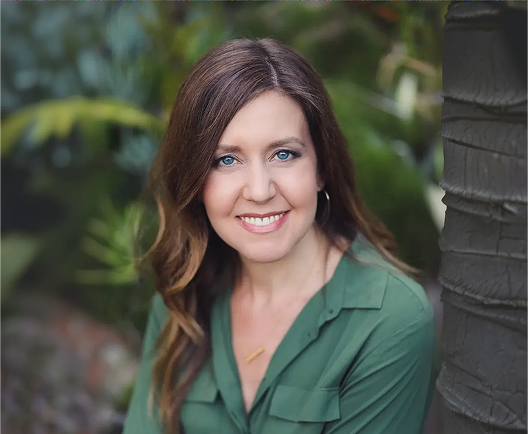
Founder and Clinical Director, Licensed Marriage and Family Therapist
Nicole is a Certified Imago Relationship Therapist with more than two decades of clinical experience. Her integrative work may combine Imago relationship therapy with Somatic Experiencing, Trauma Touch, psychodynamic, mindfulness, and mind-body approaches. Nicole also helps match new inquiries with the therapist whose experience, style, format, and availability may fit the couple’s needs.
In person & virtual
Learn more about Nicole
Licensed Marriage and Family Therapist and Clinical Supervisor
Lisa’s couples work is informed by Imago, Emotionally Focused Therapy, attachment-based theory, and somatic approaches. She supports couples and families navigating relational conflict, stress, grief, transitions, communication patterns, and emotional disconnection.
In person & virtual
Learn more about Lisa
Licensed Marriage and Family Therapist
Crystal’s couples work is informed by Imago and integrates relational, somatic, attachment-based, and depth-oriented approaches. She draws from the Developmental Model, Relational Life Therapy, Emotionally Focused Therapy, Gottman Relationship Therapy, and intimacy-focused frameworks to help couples address communication breakdowns, trust, emotional disconnection, and intimacy concerns.
In person & virtual
Learn more about Crystal
Licensed Marriage and Family Therapist
Rebecca provides individual, couples, and family therapy through a collaborative, client-centered approach grounded in authenticity, empathy, and equality. Her Imago-informed couples work may also integrate attachment theory, Internal Family Systems, Narrative Therapy, and somatic interventions to support couples navigating relational patterns, life transitions, grief, trauma, and communication concerns.
In person & virtual
Learn more about RebeccaMindful Guides Therapy Center offers in-person therapy at 2255 Avenida De La Playa, Suite 4A, La Jolla, CA 92037, serving couples from La Jolla and communities throughout San Diego.
All four therapists offer both in-person sessions at the La Jolla office and secure online therapy for clients located in California. Some relationship concerns may be better suited to in-person sessions; during the consultation, you can discuss which format is clinically appropriate for your needs.

Imago Relationship Therapy is one way to approach relationship concerns. These related services and resources can help you understand the available options without replacing a conversation about clinical fit.
Imago Relationship Therapy is a structured form of relationship and couples therapy that helps partners understand recurring patterns, explore how earlier experiences may influence present reactions, and practice more intentional communication. The model was co-created by Harville Hendrix, Ph.D., and Helen LaKelly Hunt, Ph.D.
The Imago Dialogue is a structured communication practice involving mirroring, validation, and empathy. One partner speaks while the other listens and reflects back what was heard. Partners then change roles so each person’s experience has space to be understood.
Couples therapy is a broad category that includes many approaches. Imago therapy places particular emphasis on the relationship pattern, earlier relational experiences, emotional needs, and a structured dialogue process. It can also be integrated with attachment-based, psychodynamic, somatic, mindfulness, or other relational approaches.
Imago therapy may help couples slow down reactive conversations, identify the cycle beneath the argument, express underlying feelings and needs, and practice listening without immediately defending or counterattacking. Results vary, and the approach should be adapted to the couple.
Imago-informed work may provide structure for discussing impact, accountability, safety, needs, and the possibility of repair. It does not guarantee reconciliation or require either partner to remain in the relationship. The treatment plan should reflect the couple’s circumstances and safety.
Imago couples therapy and the full Imago Dialogue generally involve both partners. One person may begin with individual therapy to understand personal patterns or clarify needs when the other partner is not ready, but that is different from conjoint couples therapy.
The therapist’s role is not to determine which partner is the problem. The therapist helps both people understand the relationship pattern, communicate more accurately, take responsibility for their impact, and consider what each person needs in order to move forward.
Treatment length varies according to the concerns, level of distress, safety, goals, duration of the relationship pattern, therapist fit, and progress. Your therapist can discuss goals, frequency, and progress with you throughout the work.
Yes. Nicole, Lisa, Crystal, and Rebecca offer both in-person therapy at the La Jolla office and secure online therapy for clients located in California. The consultation can help determine which format is clinically appropriate for your concerns.
Ask about the therapist’s Imago training, couples-therapy experience, approach to conflict and safety, whether other methods are integrated, and how sessions are structured. A free consultation can help you discuss therapist fit, scheduling, location, and current availability.
If you and your partner are looking for Imago Relationship Therapy in San Diego, a free 15-minute consultation can help you take the next step. We can learn what brings you to therapy, answer initial questions, and help determine whether Imago therapy, another form of couples therapy, or individual support may be the right fit.
To schedule a free 15 minute phone consultation call (858) 568-7803 or fill out the form